
Tag: Agilent
Unleashing Spectral Power: Agilent NovoCyte Opteon Arrives in ANZ


A Joe Blogs post by Joe Roberts, PhD
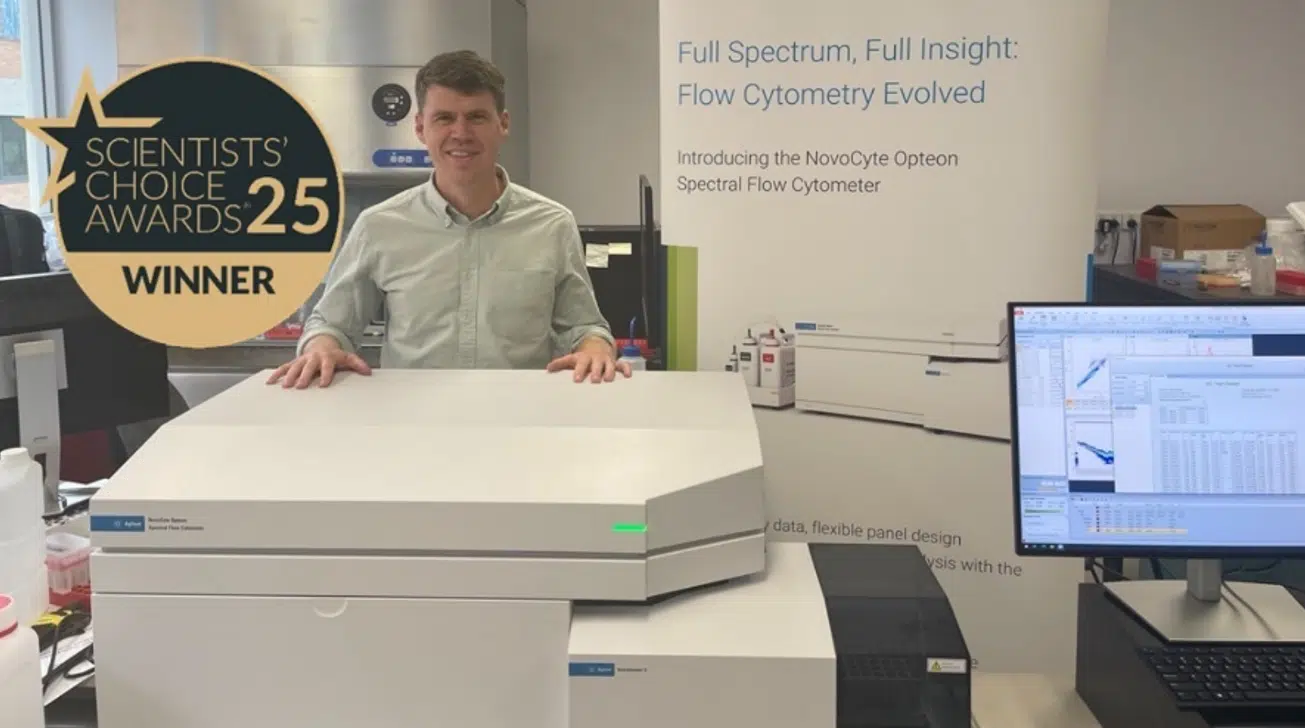
Spectral flow cytometry continues to transform single-cell research – and now, for the first time, laboratories in Australia and New Zealand can experience the Agilent NovoCyte Opteon first hand.
Launched globally at CYTO 2024, the NovoCyte Opteon has already earned international recognition, taking home the Select Science Scientist’s Choice Award for “Best New Drug Discovery & Development Product of 2024.” With up to five lasers, 73 detectors, and cutting-edge optical engineering, this system represents the next generation of high-dimensional cytometry – and it’s now available for demo in ANZ.
Spectral acquisition, redefined
Unlike conventional cytometry, the NovoCyte Opteon captures the full emission spectra of each fluorochrome across all lasers. This approach allows for greater panel flexibility, more accurate unmixing, and cleaner resolution of overlapping signals – ideal for complex immunophenotyping studies.
Spectral Flow Cytometry vs Conventional Flow: What’s the Difference?
Traditional flow cytometry detects fluorescence using individual optical filters for each fluorochrome, limiting panel size and often causing signal overlap.
Spectral flow cytometry – like the Agilent NovoCyte Opteon – captures the entire emission spectrum from every fluorochrome across all lasers.
This enables:
-
Greater panel flexibility with more markers in a single run
-
Improved accuracy through spectral unmixing of overlapping signals
-
Cleaner data by accounting for autofluorescence as a separate spectral component
The result is a more powerful, precise, and reproducible analysis – ideal for complex immunophenotyping and high-dimensional research.
Configurability and Optics
Researchers can choose 3-, 4-, or 5-laser configurations, with the flagship system spanning UV, Violet, Blue, Yellow/Green, and Red lasers – and up to 73 detectors. Agilent’s proprietary optics and electronics maximise sensitivity and spectral separation, ensuring high-quality data.
Dynamic Range, Small-Particle Detection, and Autofluorescence Handling
It boasts a wide dynamic range both for fluorescence and scatter (size) detection, reducing the need for frequent detector adjustments.
Dual-laser small particle detection (using 405 nm and 488 nm SSC) enables detection of particles down to ~80 nm without needing separate adjustments between cell and particle modes.
Also, the instrument supports autofluorescence subtraction (i.e. treating autofluorescence as a spectral component), which helps resolve dim populations more clearly.
Reliability and Stability Built In
To maintain performance in variable lab environments, the NovoCyte Opteon integrates on-board temperature control, fluidics monitoring, electronics sensor circuits, and real-time instrument status feedback.
Automation and Throughput
It’s compatible with the NovoSampler S, accepting 40-tube racks and microplates (384/96/48/24), and is ready for robotic automation. Calibration is automated, with templates for labware types saved for reproducibility. Carryover is minimal (< 0.1 %) via rinse cycles.
Software and Workflows
Agilent’s NovoExpress (Opteon) software version 2.0+ underpins the acquisition, unmixing, analysis, and reporting workflow. They’ve enhanced the user interface with an “unmixing” tab, streamlining spectral unmixing steps. The software supports both real-time acquisition and downstream “offline” analyses.
Joe’s Takeaway
The arrival of the Agilent NovoCyte Opteon in the ANZ region marks a real milestone for spectral flow cytometry. Local researchers now have access to one of the most advanced, award-winning platforms available – combining powerful optics, automation readiness, and Agilent’s renowned reliability, all supported locally by Millennium Science.
If you’re interested in demoing the award-winning NovoCyte Opteon Spectral Flow Cytometer, we’d love to hear from you. Reach out to arrange a hands-on session and see what spectral flow can really do for your research.
And if you’re attending CYTO-Connect (Perth, November 27-29, 2025), come and say hello – we’ll be there showcasing the Opteon and chatting all things spectral!
If you’re interested in a demo of the Opteon, contact us today!
Until next time… happy experimenting!

On this page
- A Joe Blogs post by Joe Roberts, PhD
- Spectral acquisition, redefined
- Spectral Flow Cytometry vs Conventional Flow: What’s the Difference?
- Configurability and Optics
- Dynamic Range, Small-Particle Detection, and Autofluorescence Handling
- Reliability and Stability Built In
- Automation and Throughput
- Software and Workflows
- Joe’s Takeaway
Streamline Microbial Growth Studies with the Agilent BioTek LogPhase 600
Overview
The Agilent BioTek LogPhase™ 600 Microbiology Reader is a high-performance solution for labs studying microbial growth and metabolism. Purpose-built to support real-time, kinetic analysis of bacteria and yeast cultures, the LogPhase 600 enables the simultaneous monitoring of microbial growth curves across up to four standard 96-well microplates – boosting throughput and consistency for microbiology applications.

Precision Temperature Control and Shaking for Reliable Growth Conditions
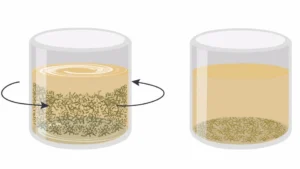
Designed specifically for microbial assays, the LogPhase 600 features robust shaking and sensor-driven temperature control, which are essential for optimal bacterial and yeast cell growth. The integrated orbital shaking mechanism keeps microbial cultures in suspension, promoting uniform growth across all wells.
Advanced temperature regulation ensures uniform heating throughout the instrument, eliminating edge effects and minimising evaporation. A carefully engineered top-to-bottom temperature gradient prevents condensation on sealed plates – reducing light scatter and ensuring accurate optical density (OD) measurements.
Consistent and Reproducible Microbial Growth Curves
Whether you’re performing bacterial growth curve analysis or extended kinetic microbial studies, the LogPhase 600 provides reproducible results across replicates. Its stable environment makes it ideal for long-term microbial monitoring, delivering high-quality data for even the most demanding experimental conditions.
Intuitive Software for Simplified Microbiology Analysis
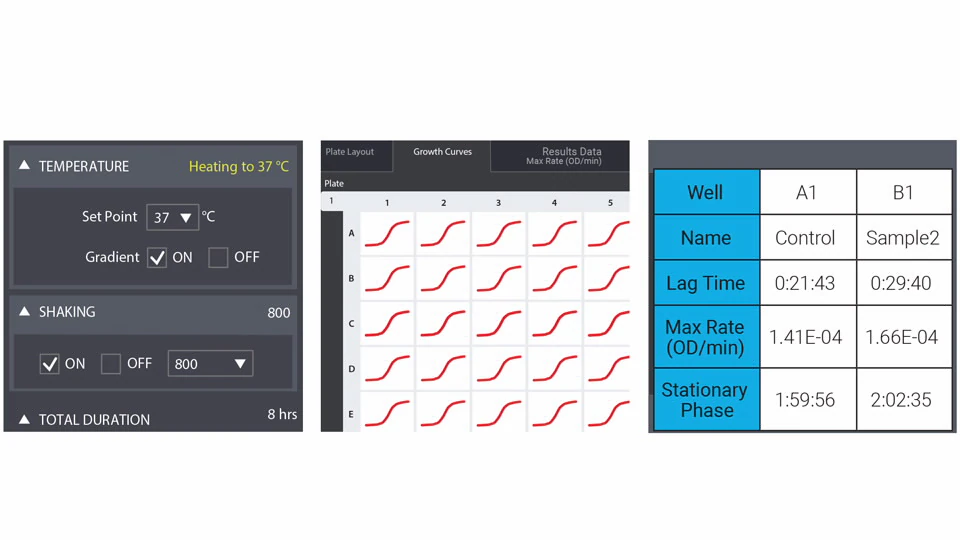
The LogPhase 600 is controlled via a user-friendly app that simplifies data acquisition and analysis across multiple microplates. Designed with microbiologists in mind, the software allows users to:
-
Start using the instrument with minimal training
-
View multiplate data simultaneously
-
Automatically calculate key growth parameters like Lag time, Maximum growth rate (OD/min) and Time to stationary phase
This makes it easy to integrate the instrument into both academic and industrial lab workflows.
Versatile Applications for High-Throughput Microbiology
With its four-plate capacity, the LogPhase 600 delivers higher throughput than single-plate readers – ideal for labs running large-scale experiments. Common research areas include:
-
Bacterial and yeast growth assays
-
Algal growth studies
-
Antimicrobial resistance research
-
Biofuel production monitoring
-
Food and beverage microbiology testing
Why Choose the Agilent BioTek LogPhase 600?
For researchers seeking a dedicated microbiology plate reader that delivers accuracy, scalability, and ease of use, the LogPhase 600 offers an unmatched combination of throughput, data quality, and application-specific performance. Whether you’re monitoring bacterial growth under various conditions or conducting resistance assays, the LogPhase 600 ensures your data is consistent and actionable.
Contact Us
If you have a question or would like pricing for a LogPhase 600 simply email customerservice@mscience.com.au.
On this page
- Overview
- Precision Temperature Control and Shaking for Reliable Growth Conditions
- Consistent and Reproducible Microbial Growth Curves
- Intuitive Software for Simplified Microbiology Analysis
- Versatile Applications for High-Throughput Microbiology
- Why Choose the Agilent BioTek LogPhase 600?
- Contact Us