
Exosome Extraction Explained


Exosome Isolation Without the Wait: Norgen Biotek's Silicon Carbide Approach
Waiting for the ultracentrifuge. Overnight incubations. Precipitation steps that compromise sample integrity. If you’re working with exosomes, you know these frustrations well, and you’ll also know how much they slow down what is otherwise one of the most productive areas of molecular biology research. Norgen Biotek’s proprietary silicon carbide (SiC) resin technology takes a fundamentally different approach to exosome isolation, one that addresses these pain points without sacrificing purity or yield.
Why Conventional Exosome Isolation Falls Short
Ultracentrifugation remains the most widely used method for exosome isolation, but its limitations are well documented. It is time-consuming, equipment-intensive, and poorly suited to high-throughput workflows. Repeated high-speed centrifugation steps can compromise vesicle integrity and co-pellet protein aggregates and lipoproteins, complicating downstream analysis. Polymer precipitation methods simplify the procedure but introduce their own purity trade-offs, and the resulting material is often incompatible with sensitive RNA or proteomic applications. For researchers working with clinical sample types such as plasma, serum and urine, where input volumes are limited and sample quality is paramount, neither approach is ideal.
The Silicon Carbide Difference: Selective Binding at the Isoelectric Point
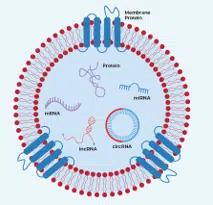
Norgen’s SiC resin technology works on a fundamentally different principle to precipitation or centrifugation-based methods. The resin selectively binds exosomes through interactions with exosomal membrane proteins at their isoelectric points under defined pH conditions. By adjusting the pH of the sample to a specific binding pH, exosomes are captured onto the SiC resin matrix via spin column chromatography. A subsequent change in pH conditions releases the intact, purified exosomes for downstream use. This means no chemical precipitation reagents, no phenol/chloroform, no protease treatments, and critically, no ultracentrifuge. The result is purified intact exosomes in the 40–200 nm size range, free from contaminating RNA-binding proteins, in under 30 minutes.

A Streamlined Workflow Across Multiple Sample Types
Norgen’s exosome purification kits support plasma, serum, urine, saliva, bacteria, and cell culture media, with kit formats optimised for each sample type. The simplified spin column workflow requires no special instrumentation or training, making it accessible regardless of your available equipment. Purified exosomes are compatible with NanoSight nanoparticle tracking analysis, transmission electron microscopy, functional assays, and direct downstream RNA isolation, without any additional clean-up steps.
For cell culture media workflows, it is worth noting that standard FBS contains substantial quantities of bovine-derived exosomes. Norgen also supplies FBS Exosome Depletion Kits, allowing researchers to prepare exosome-depleted FBS prior to use as a growth supplement – an important step for ensuring that downstream exosomal cargo analysis reflects the biology of your cells of interest rather than contaminating bovine vesicles.
For researchers looking for ready-to-use exosome material, Norgen also offers purified exosomes from human adipose-derived MSCs, suitable for use as a positive control, reference material, or workflow comparison sample.
From Exosomes to Exosomal RNA in a Single Workflow
One of the most practically valuable aspects of the Norgen platform is the availability of combined purification and RNA isolation kits, which allow researchers to move from raw sample to isolated exosomal RNA in a single, uninterrupted workflow. The RNA isolation step uses Norgen’s SiC resin to capture RNA of all sizes – including microRNA – irrespective of size or GC content, without bias. The isolated RNA is free from protein-bound circulating RNA and is suitable for RT-qPCR, small RNA sequencing, transcriptomics, and biomarker discovery workflows. For plasma and serum samples where maximum purity is required, the EXTRAClean range provides an additional level of clean-up optimised for liquid biopsy and sensitive downstream assays.
The Norgen Exosome Portfolio
The full range covers intact exosome purification, combined exosome purification and RNA isolation, standalone exosomal RNA isolation from previously purified exosomes, free-circulating RNA purification, FBS exosome depletion, and bacterial extracellular vesicle isolation – with kit formats available across a range of sample volumes and throughput requirements.

Key Takeaways
- Norgen’s SiC resin selectively captures exosomes at exosomal membrane protein isoelectric points under defined pH conditions – no ultracentrifugation, precipitation reagents, or special equipment required
- Intact exosomes in the 40–200 nm size range are purified from plasma, serum, urine, saliva, or cell culture media in under 30 minutes
- Combined purification and RNA isolation kits support end-to-end workflows from sample to sequencing-ready RNA
- All sizes of exosomal RNA, including microRNA, are captured without size or GC bias
- FBS exosome depletion kits and bacterial EV isolation round out a portfolio covering the full range of exosome research needs
Explore Norgen Exosome Solutions Through Millennium Science
Millennium Science is the authorised distributor of Norgen Biotek products for researchers in Australia and New Zealand. The full Norgen exosome portfolio is available to order now.
Visit the Norgen Biotek page on the Millennium Science website or contact the team to discuss the right workflow for your sample type and application.
On this page
- Exosome Isolation Without the Wait: Norgen Biotek's Silicon Carbide Approach
- Why Conventional Exosome Isolation Falls Short
- The Silicon Carbide Difference: Selective Binding at the Isoelectric Point
- A Streamlined Workflow Across Multiple Sample Types
- From Exosomes to Exosomal RNA in a Single Workflow
- The Norgen Exosome Portfolio
- Key Takeaways
- Explore Norgen Exosome Solutions Through Millennium Science